For many years, the choice facing an office occupier was relatively straightforward. A business could take a conventional lease, fit the space out and operate it itself; or, if it needed something smaller or more flexible, it could take serviced offices. That distinction has become increasingly blurred.
Today, occupiers can choose from a spectrum of solutions ranging from a traditional lease of unfitted accommodation through landlord-fitted space, Cat A+, managed offices and fully serviced accommodation. There are also numerous variations within each category.
The result is considerably more choice — but also considerably more complexity.
A spectrum rather than a binary choice
At one end of the spectrum remains the traditional office lease. The occupier typically makes a relatively long-term commitment, takes responsibility for fitting out and operating its premises and, in return, enjoys a high degree of control over its workplace.
At the other end sits the traditional serviced-office model. The accommodation is ready to occupy, furniture and services are provided, commitments can be relatively short and the operator deals with much of the day-to-day management.
Increasingly, however, many transactions sit somewhere between the two.
Landlords may offer fully fitted accommodation on an otherwise conventional lease. Cat A+ space provides an occupier with a completed workplace without requiring it to undertake its own fit-out. Managed-office providers can procure, fit out and operate a dedicated office specifically for an individual client, often over a longer term than would historically have been associated with flexible workspace.
The boundaries are becoming increasingly difficult to define.
This development is evident in the type of transactions Spring4 is increasingly involved with. Our recent instructions have ranged from conventional leased acquisitions through landlord-delivered bespoke fit-outs to fully serviced accommodation, reflecting the much wider range of solutions now available to occupiers.
Why has the market changed?
Businesses are understandably reluctant to commit today to precisely how much office space they will require many years into the future. Headcount changes, hybrid working patterns and evolving workplace strategies have increased the value placed on optionality.

But flexibility is only part of the story. The capital cost and management burden associated with a traditional office lease can be substantial. An occupier taking conventional space may need to fund a fit-out, furniture, IT infrastructure and professional fees before it has occupied a single desk. It then assumes responsibility for running that workplace throughout the lease term and potentially faces significant reinstatement and dilapidations liabilities when it leaves.
For some businesses, transferring more of those responsibilities to a landlord or operator is attractive even if the apparent occupational cost is higher. Landlords have responded accordingly. Rather than simply offering space, they are increasingly offering a more complete product.
Comparing apples with apples
This creates one of the biggest challenges for occupiers: determining which option genuinely represents best value. Consider two competing proposals. One might be a conventional lease quoted at £70 per sq ft. Another might be a managed office quoted at £1,000 per desk per month.
At first glance, the conventional lease may appear considerably cheaper. But the two figures are measuring completely different things.
To understand the true cost of the leased option, the occupier may need to add business rates, service charge, utilities, cleaning, security, repairs, insurance, furniture, IT infrastructure and the capital cost of fitting out the premises. Professional fees, finance costs and eventual dilapidations exposure may also need to be considered. Conversely, many of those costs may already be wrapped into the managed-office price.
Even then, the comparison is not straightforward. A serviced or managed solution may require less space because meeting rooms, reception facilities and amenities are shared. A conventional lease may provide significantly greater control and potentially better long-term value. One proposal may require substantial capital expenditure on day one; another converts much of that expenditure into an ongoing operating cost.
The cheapest rent is therefore not necessarily the cheapest way to occupy an office.
Cost is only one part of the decision
Financial modelling matters, but the right solution cannot be determined from a spreadsheet alone.
A headquarters occupier intending to remain in the same location for fifteen years may value control, identity and security of tenure above flexibility. A rapidly growing technology business may attach far greater value to the ability to expand or contract. Another business may simply not want the distraction of designing, constructing and operating an office.
Occupiers need to consider four things together: cost, flexibility, control and risk. No single model wins on all four.
A conventional lease can offer control and long-term cost efficiency but requires greater commitment and responsibility. Serviced space maximises convenience and flexibility but can command a premium. Managed and fitted solutions occupy the increasingly important territory between the two.

When comparing options, occupiers should ask:
• How certain are we about our future headcount and space requirement?
• How much upfront capital are we willing to commit?
• How much control do we need over design, branding and operation?
• What responsibilities and exit liabilities are we prepared to retain?
• Are the proposals being compared over the same period and on the same cost basis?
Choice is good — provided it is understood
The expansion of occupational models is ultimately positive for businesses. Occupiers have more ways than ever to structure their real estate around their operational and financial priorities. But greater choice makes good advice more important rather than less.
Twenty years ago, comparing competing office options often meant comparing rents, incentives and lease terms. Today, two apparently competing buildings may be offering fundamentally different products with fundamentally different cost structures.
For occupiers, the challenge is no longer simply “Which building should we take?”
Increasingly, the question comes first:
“How do we want to occupy it?”
Spring4 helps occupiers compare these options on a consistent basis, considering not only headline cost but also capital commitment, flexibility, operational responsibility and exit risk.
Spring4 Spotlight – What Have We Been Up To?
Colour Works, E15
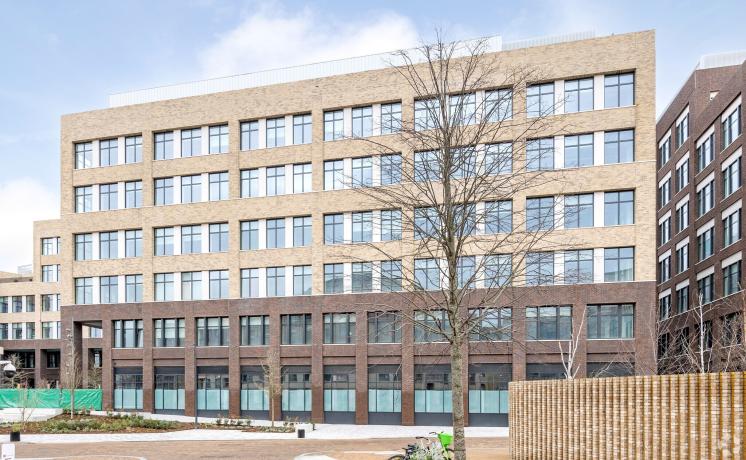
Location: London
Client Sector: Occupational Health Services
Success Story: Acquisition of 4,500 sq ft office premises in London. Spring4 Project Management will be undertaking the fit out on behalf of this long standing client.

Willow House, NR7

Location: Norwich
Client Sector: Insurance
Success Story: Settlement of 60,000 sq ft rent review at Willow House in Norwich. Spring4 generated in excess of £1.2m in savings compared to the landlord’s opening position.
18-20 St John Street, EC1

Location: London
Client Sector: AI
Success Story: Acquisition of new London HQ for growing US AI company. The client’s new offices were acquired on a fully managed basis with a rolling tenant break clause, ensuring maximum flexibility moving forwards.